Why Queensland homes and buildings overheat through glass
Queensland buildings often deal with strong sun, high heat, bright glare and long periods of solar exposure.
Glass can allow significant solar energy into a room, especially when windows face north, west or receive direct afternoon sun.
Common problem areas include:
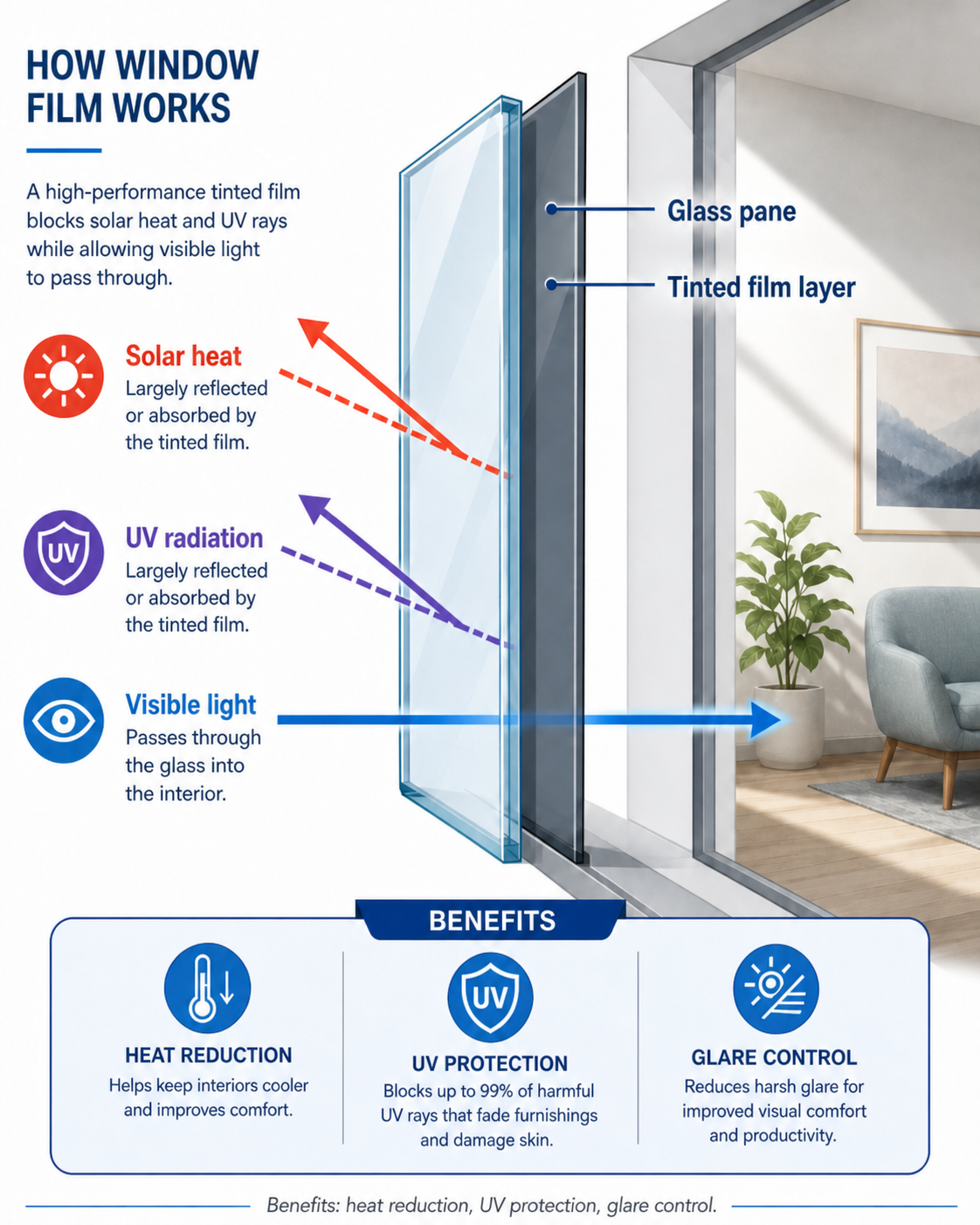
Window film helps by changing how much solar energy passes through the glass.
What heat reduction window film actually does
Heat reduction window film is designed to reduce solar heat entering through glass.
Different films do this in different ways. Some reflect more solar energy. Some absorb more. Some maintain a lighter appearance while still reducing heat. Others are darker or more reflective.
The key point is this:
The best film is the one that gives the right balance of heat reduction, glare control, appearance, privacy and glass compatibility.
The darkest film is not always the best film
Many people assume darker tint means better heat reduction.
That is not always true.
A very dark film may reduce glare strongly, but it may not be the best choice if the customer wants to keep natural light, preserve the look of the home, avoid excessive reflectivity or reduce thermal stress risk.
Some lighter high-performance films can reject heat while maintaining a more natural appearance.
The right choice depends on the glass and the outcome required.
Factors that determine the best heat reduction film
Glass type
Glass type affects which films are suitable. Annealed glass, toughened glass, laminated glass and low-E glass can all respond differently to solar heat and window film.
Window direction
North and west-facing glass often receives stronger sun exposure, especially during hot parts of the day. These windows usually need careful film selection.
Amount of direct sun
A window in full afternoon sun may need a different film from a window that only receives filtered or morning light.
Partial shading
Partial shading from eaves, trees, frames, blinds or nearby structures can increase temperature differences across the glass. This can affect thermal stress risk.
Desired appearance
Some customers want a darker or more reflective appearance. Others want heat reduction without changing the look of the glass too much.
Privacy needs
Privacy films can reduce visibility during daylight, but many are less private at night when the inside is brighter than outside.
Glare issues
If glare is the main problem, the film may need stronger visible light reduction, not just heat rejection.
Interior fading risk
If fading is a concern, UV protection and total solar control should be considered alongside visible light and heat.
Common types of heat reduction window film
Reflective solar control films
Reflective films can provide strong heat and glare reduction. They often create a more noticeable external appearance and may improve daytime privacy.
Best for
- Strong heat reduction
- Exposed glass
- Commercial buildings
- Daytime privacy
- Customers who like a reflective finish
Considerations
- More visible from outside
- Privacy may reduce at night
- Must be matched carefully to the glass
Neutral or low-reflective films
Neutral films reduce heat and glare while keeping a more subtle appearance. They are often suitable where the customer wants performance without a highly reflective look.
Best for
- Homes
- Offices
- Architectural glass
- Customers wanting a cleaner finish
- Moderate heat and glare control
Considerations
- May not provide the strongest privacy
- Performance varies by product
High-performance lighter films
Some premium films can reduce heat while maintaining a lighter appearance. These can be useful where natural light and appearance are important.
Best for
- Homes with views
- Premium residential projects
- Commercial spaces needing natural light
- Glass where darkness is not desired
Considerations
- Usually more expensive
- Must be selected based on the actual glass and exposure
Darker glare-control films
Darker films can be useful where glare is the main issue, especially in media rooms, offices or exposed rooms with harsh light.
Best for
- Glare reduction
- Screen comfort
- Bright rooms
- Media rooms
- Some privacy applications
Considerations
- Can make spaces feel darker
- May not be suitable for all glass
- Can increase heat absorption depending on the film
Residential heat reduction
For homes, the best heat reduction film usually depends on which rooms are overheating and how much natural light the homeowner wants to keep.
Common residential applications include:
- Living rooms
- Bedrooms
- Home offices
- Stairwells
- Kitchens
- West-facing windows
- Large sliding doors
A good residential recommendation should balance heat reduction, glare control, appearance and glass compatibility.
Related service: residential window tinting
Commercial heat reduction
For commercial buildings, heat reduction film can improve comfort for staff, clients and customers.
Common commercial applications include:
- Offices
- Shopfronts
- Meeting rooms
- Reception areas
- Schools
- Medical suites
- Hospitality venues
In commercial settings, the film choice should also consider business presentation, staff comfort, customer experience, access and disruption during installation.
Related service: commercial window tinting
Marine heat and glare reduction
Marine environments have strong glare, reflected light and harsh exposure. The best film for boats and yachts should consider heat, glare, privacy, visibility, salt exposure and the appearance of the vessel.
Marine tinting should be treated as a specialist application, not a standard window tinting job.
Related service: marine window tinting
What about thermal stress?
Thermal stress happens when different parts of a glass pane heat unevenly. Some window films can increase glass temperature, especially darker or more absorbent films.
This does not mean window film is unsafe.
It means the film must be matched to the glass.
This is especially important where Low-E coatings are involved. See our guide to window film and Low-E glass for compatibility-specific advice.
Glass type, pane size, edge condition, shading, frame condition and sun exposure should all be considered before selecting a film.
Related guide: can window tint cause glass to crack
How Ultra Tint recommends heat reduction film
Ultra Tint does not recommend film based only on darkness or price.
Before recommending a heat reduction film, we consider:
The aim is to choose the film that performs well, looks right and suits the glass.
Summary
The best window film for heat reduction in Queensland depends on the glass, the sun exposure and the result required.
Darker film is not always better. Reflective film is not always suitable. Lighter film is not always weaker.
The right choice depends on balancing heat reduction, glare control, privacy, appearance, UV protection and glass compatibility.
If a room, office, shopfront or vessel is too hot, Ultra Tint can inspect the glass and recommend a suitable film before installation.
For related local coverage, see our window tinting service areas and window tinting FAQs.
Ready for a film recommendation? Book an onsite quote.
FAQs
What is the best window film for heat reduction?
The best film depends on the glass type, sun exposure, desired appearance, glare level, privacy requirement and thermal stress risk. There is no single best film for every window.
Is darker window tint better for heat reduction?
Not always. Darker films can reduce glare strongly, but some lighter high-performance films can reduce heat while keeping a more natural appearance.
Can window film make a room cooler?
Yes. The right window film can reduce solar heat entering through glass, which can make a room more comfortable. The result depends on the film, glass and sun exposure.
Will heat reduction film make my home too dark?
Not necessarily. Modern films are available in different shades and performance levels. Some films reduce heat while keeping a lighter appearance.
Does heat reduction film reduce electricity costs?
It may reduce air-conditioning load in some buildings, but results depend on the building, glazing, film selected and how the space is used. Comfort improvement is usually the more reliable benefit.
Can heat reduction film cause glass to crack?
It can increase thermal stress on some glass types if the wrong film is selected. Proper glass assessment and film selection reduce this risk.
Get the right heat reduction film for your glass
If your home, business or vessel is too hot, Ultra Tint can inspect the glass and recommend a film that suits the heat problem, the appearance you want and the glass itself.