Residential window film

Residential Window Tinting Gold Coast

Reduce heat, glare and fading with professionally installed home window film

Ultra Tint installs residential window tinting across the Gold Coast, Brisbane and surrounding areas. We help homeowners reduce heat, glare and UV exposure while improving privacy and comfort inside the home.

We use premium window films, including 3M products, and install them with the same care and precision expected on high-end residential, commercial and marine projects.

Most residential window tinting jobs are completed in one day, depending on the size of the property and the number of windows being filmed.

Since 1977

Established Gold Coast residential window film specialists

Since 1977, Ultra Tint has helped Gold Coast homeowners improve comfort, privacy and UV protection with professionally installed window film. For the past 20 years, owner Kevin Humphreys has personally led the business, keeping the focus on practical advice, careful film selection and clean installation standards.

Direct answer

Residential window tinting reduces heat, glare and UV exposure while improving privacy and comfort inside the home. Ultra Tint recommends film based on the glass type, sun exposure and the result required.

Why it works

Why homeowners choose residential window tinting

Residential window tinting is one of the most effective ways to improve comfort without replacing your glass.

It can help with:

  • Heat reduction, especially on west-facing or exposed windows
  • Glare control in living areas, offices and media rooms
  • UV protection to help reduce fading of floors, furniture and interiors
  • Daytime privacy without fully blocking natural light
  • Improved comfort in rooms that overheat through the glass
  • A cleaner external appearance when the right film is selected

Glass compatibility

The right film depends on the glass

Not every window film is suitable for every piece of glass.

Glass type, window size, shading, orientation, frame condition and existing damage all matter. Choosing the wrong film can increase the risk of thermal stress, especially on certain types of glass or heavily exposed windows.

Some modern Low-E glass requires special care when selecting window film. Learn more about Low-E glass and film compatibility.

This is why Ultra Tint does not treat residential tinting as a one-size-fits-all product.

A cheaper film is not always cheaper once you factor in performance, durability and risk.

Film options

Common residential window film options

Heat reduction films

These films are designed to reduce solar heat entering the home. They are commonly used on exposed living areas, bedrooms, stairwells and west-facing glass.

Best for:

  • Hot rooms
  • Afternoon sun
  • Air-conditioning support
  • Improving comfort during Queensland summers

Glare reduction films

Glare control films reduce harsh light without necessarily making the room feel dark. They are useful for TVs, computers, kitchens, offices and bright living spaces.

Best for:

  • Media rooms
  • Home offices
  • Open-plan living areas
  • North and west-facing glass

Privacy films

Privacy films help reduce visibility into the home during daylight hours. The level of privacy depends on lighting conditions, film type and glass location.

Most reflective or privacy films work best during the day. At night, if the lights are on inside, privacy may be reduced.

Best for:

  • Street-facing windows
  • Bathrooms
  • Bedrooms
  • Front doors and sidelights

UV protection films

Most quality window films block a very high percentage of ultraviolet light, helping reduce fading of timber floors, furniture, curtains, rugs and artwork.

UV protection helps slow fading. It does not stop fading completely, because heat and visible light also contribute.

Best for:

  • Timber flooring
  • Furnished living areas
  • Display spaces
  • Rooms with valuable interiors

Recent residential work

Residential film solutions should still look at home on the property

Modern Gold Coast home with professionally tinted residential glazing.
Clean residential finish
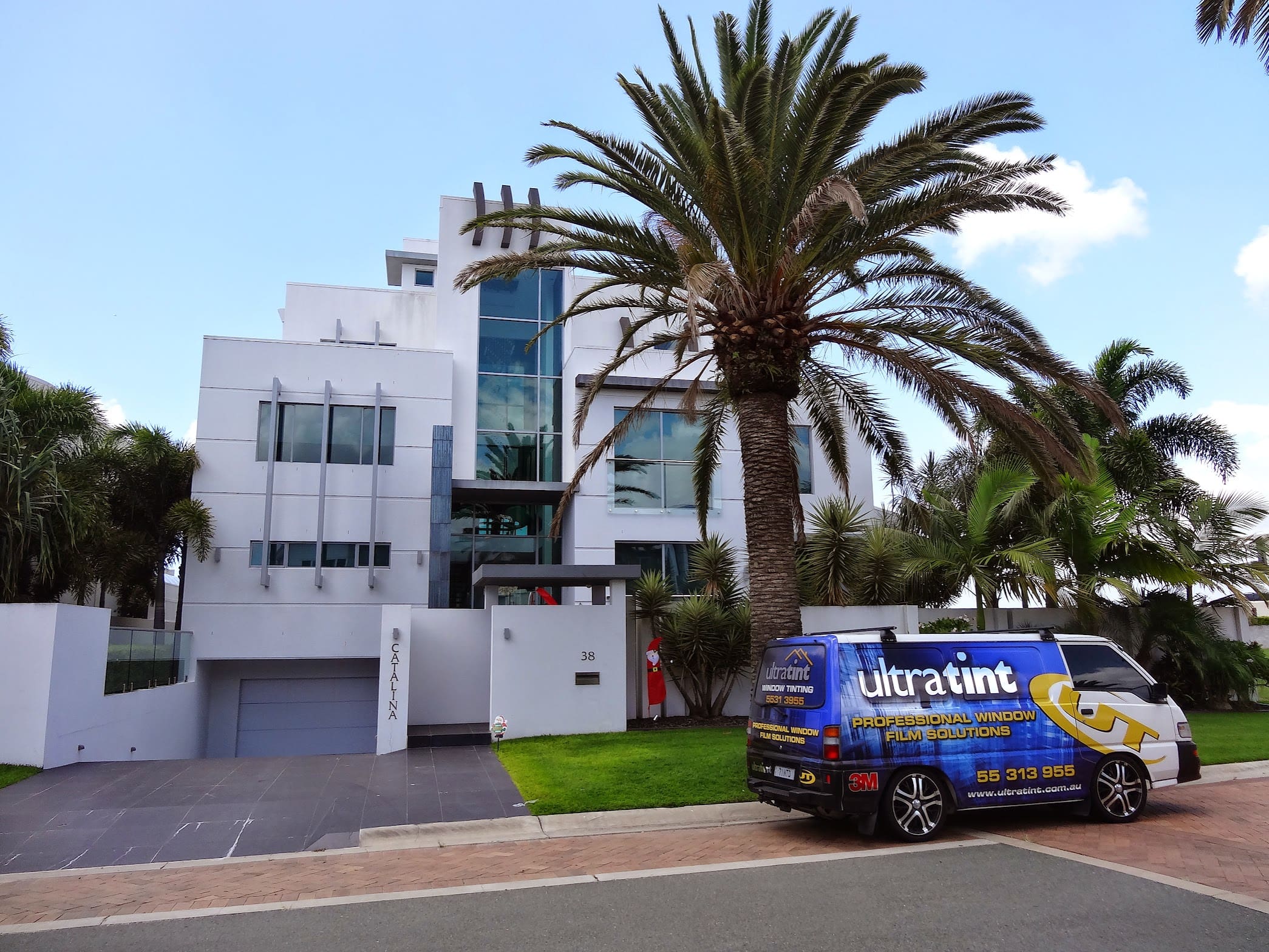
Ultra Tint vehicle parked beside a residential tinting project.
Residential project on site
Interior residential glazing showing light control and comfort after tinting.
Comfort without closing in the room

Installation process

Our residential tinting process

1

Onsite assessment

We inspect the windows, discuss the issue you want solved and assess which films are suitable.

2

Film recommendation

We recommend film options based on heat, glare, privacy, appearance and glass compatibility.

3

Quote and approval

You receive a clear quote outlining the recommended film and scope of work.

4

Professional installation

The film is installed using precision tools and proper preparation methods. We protect the surrounding area and clean up after the work is complete.

5

Aftercare guidance

We explain drying times, cleaning instructions and what to expect while the film cures.

How much does residential window tinting cost?

Residential window tinting pricing depends on:

  • Total glass area
  • Film type
  • Access difficulty
  • Number of individual panes
  • Whether old film needs to be removed
  • Travel and site requirements

As a general guide, smaller residential jobs may start from a few hundred dollars, while larger homes or premium film installations can be significantly more.

The most accurate way to price the job is with an onsite measure and recommendation. This avoids guesswork and ensures the correct film is specified for the glass.

How long does home window tinting take?

Most standard residential installations are completed in one day.

Larger homes, complex access, difficult glass layouts or old film removal may take longer. We confirm the expected timeframe before starting the job.

Will window tint make my house too dark?

Not necessarily.

Modern window films are available in different shades and performance levels. Some films are designed to reject heat while keeping a lighter appearance. Others are darker or more reflective for stronger glare and privacy control.

The best option depends on the room, the glass and how much natural light you want to keep.

Can window tint cause glass to crack?

Window film can increase thermal stress on some types of glass if the wrong film is used. This is why film selection matters.

The risk depends on factors such as glass type, window size, shading, existing damage, frame condition and sun exposure.

A professional installer should assess the glass before recommending a film. Ultra Tint takes this seriously because the cheapest film choice is not always the safest or best-performing choice.

Why choose Ultra Tint?

Ultra Tint brings technical experience, premium film knowledge and professional installation standards to every residential job.

Our work is backed by:

  • Premium film options, including 3M products
  • Extensive industry experience
  • Technical understanding of glass and film compatibility
  • Clean, careful installation
  • A 100% workmanship guarantee
  • Residential, commercial and marine tinting expertise

We do not recommend a film simply because it is dark, cheap or easy to sell. We recommend the film that suits the glass and the result you want.

FAQs

Does residential window tint reduce heat?

Yes. The right window film can significantly reduce solar heat entering through glass. The result depends on the film selected, the direction of the windows and how much sun exposure the glass receives.

Does window tint stop furniture from fading?

Window film helps reduce fading by blocking ultraviolet light and reducing heat and visible light exposure. It slows the fading process, but no film can stop fading completely.

Can people see through tinted windows at night?

Often, yes. Daytime privacy films rely on outside light being brighter than inside light. At night, when lights are on inside the home, privacy can be reduced.

How long before I can clean the windows?

You should avoid cleaning newly tinted windows until the film has fully cured. Cure time depends on the film, glass, weather and installation conditions. We provide aftercare instructions after installation.

Will bubbles disappear after installation?

Small moisture pockets or a hazy appearance can be normal while film cures. These usually dry out over time. Dirt, contamination or poor installation bubbles are different and should not be confused with normal curing.

Do you remove old window film?

Yes. Old film can usually be removed, although removal time depends on the age, condition and adhesive quality of the existing film.

Related guides and links

Best Window Film for Heat Reduction in Queensland

How to choose the right film for heat and comfort outcomes.

Read the guide

Can Window Tint Cause Glass to Crack?

Understand thermal stress risks and safe film selection.

Read the guide

Window Film Aftercare & Cleaning Guide

What to do after installation and how to clean film safely.

Read the guide

Window Film & Low-E Glass

Understand when internal film is not suitable on modern Low-E glazing.

Read the guide

Book a residential window tinting quote

If your home is too hot, too bright or lacking privacy, Ultra Tint can inspect the glass and recommend the right film for the job.

Book an onsite quote and get a clear recommendation before committing to the work.

(07) 55313955Request a Quote